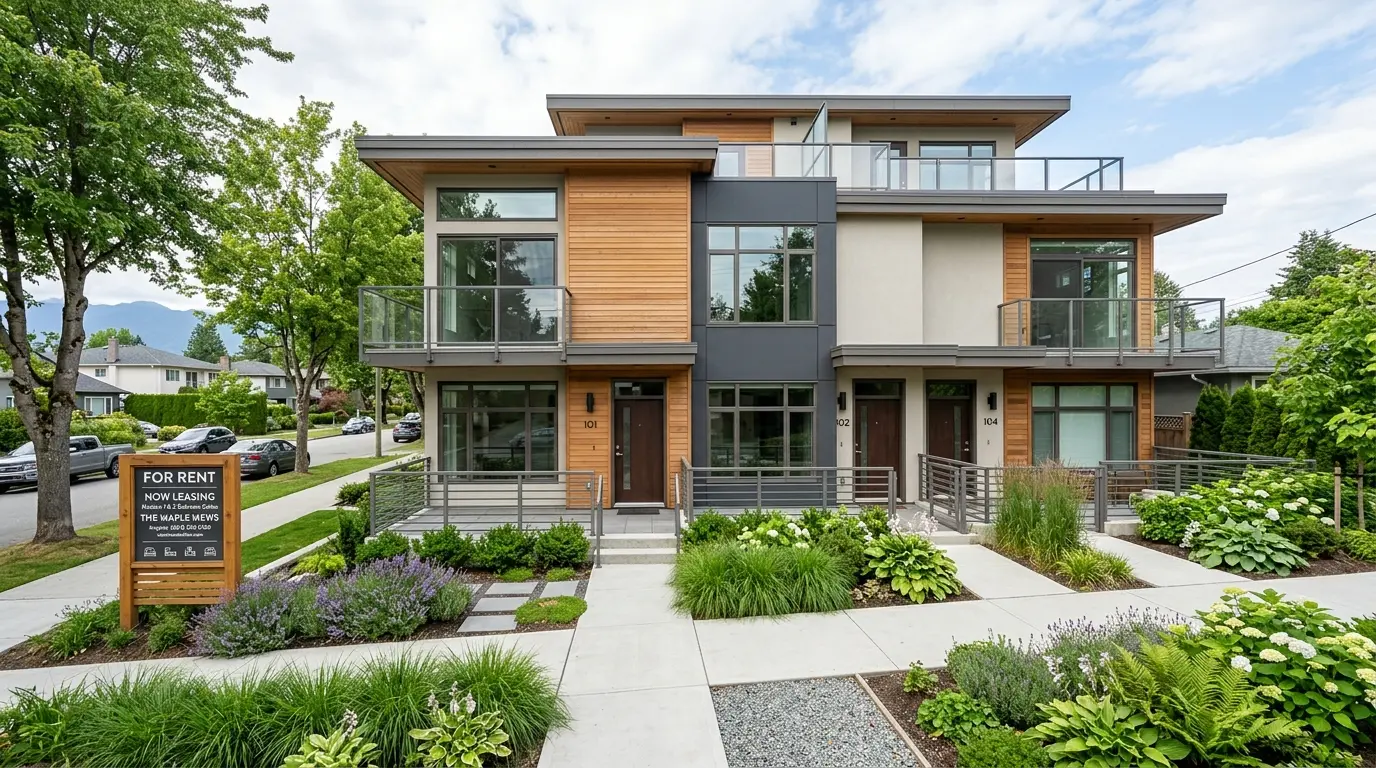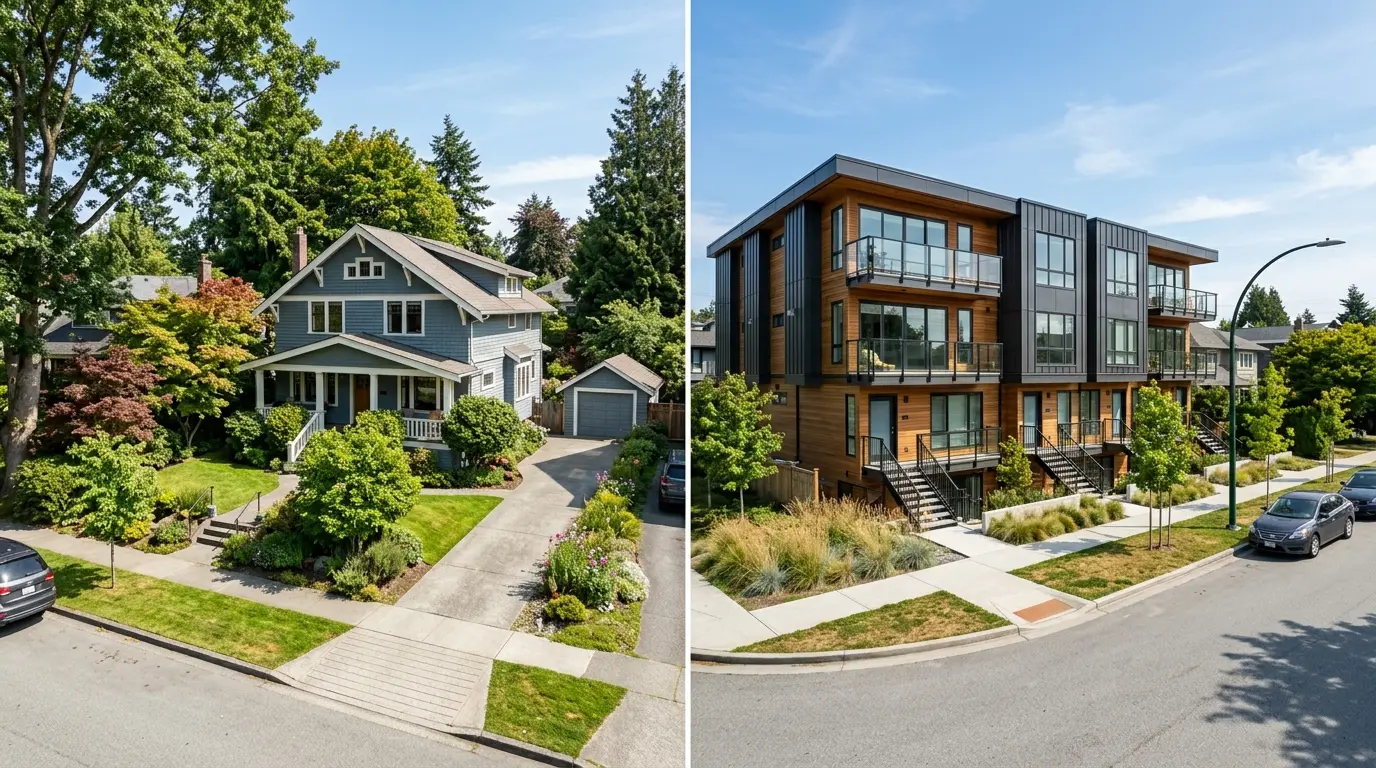
Quick answer: A 2026 guide comparing a basement secondary suite and a laneway house for rental income on a Vancouver lot, covering build cost, achievable rent, privacy, tenant appeal, resale value, and when it makes sense to build both.
A working realtor's plain guide to choosing between a basement secondary suite and a laneway house for rental income on a Vancouver lot. Build cost, achievable rent, privacy, tenant appeal, resale, and when to do both.
Want a free assessment for your property?
Leave your name and phone — Greyden will call you back with a personalized market snapshot. No spam, no drip campaigns.
Join 1,000+ Vancouver homeowners. No spam, unsubscribe anytime.
A homeowner in East Van asked me last spring how to squeeze rental income out of her lot. She had a growing mortgage, a big backyard, and an unfinished basement. Her real question, though she didn’t phrase it this way, was about trade-offs: spend a little and finish the basement, or spend a lot and build a laneway house in the back. It’s one of the most common decisions I help people work through, so let me lay it out the way I did for her.
Both options add a home you can rent. They just do it at very different price points, with very different results. I’ll walk through build cost, achievable rent, privacy, tenant appeal, resale, and when it makes sense to do both.
The basic difference
A basement secondary suite is a rental unit created inside the existing house, usually in the lower level, with its own entrance and kitchen. You’re finishing space that already exists.
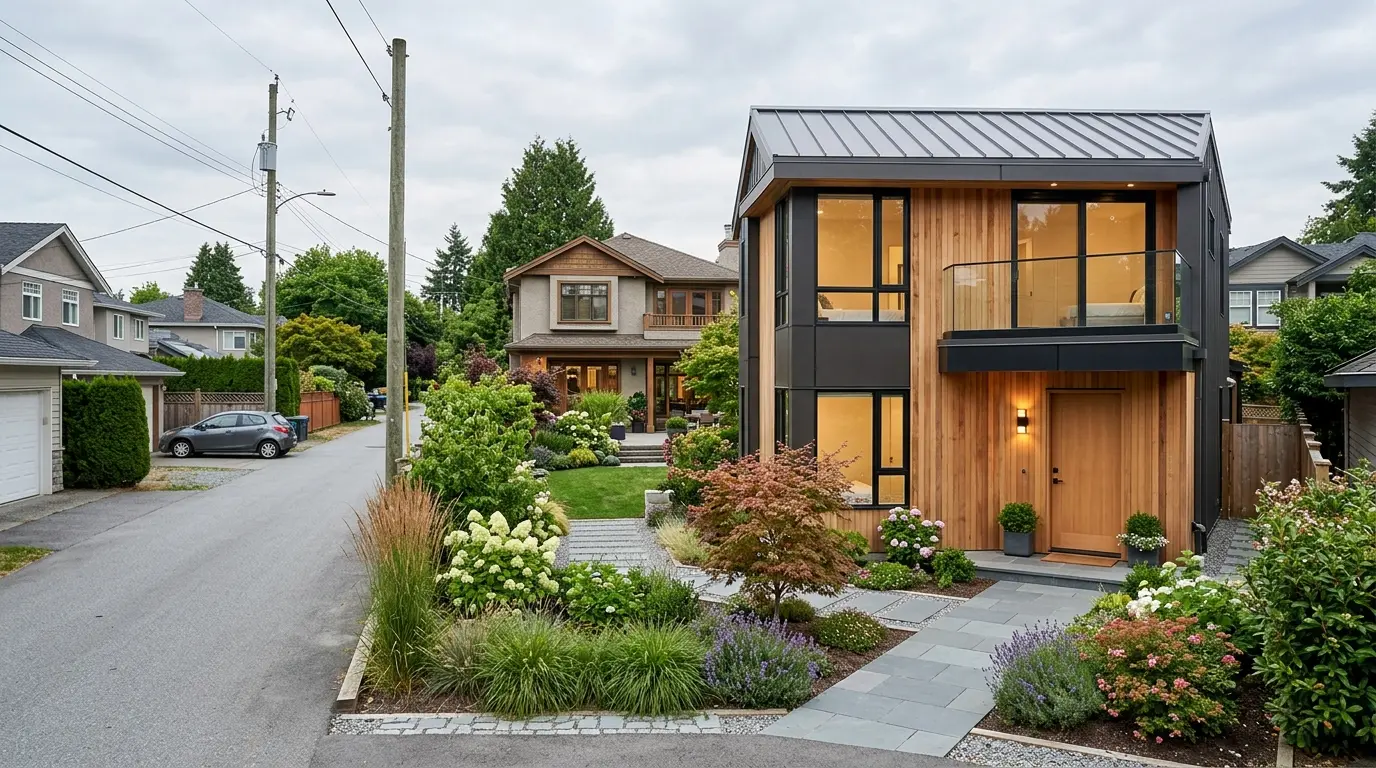
A laneway house is a separate, small standalone home built at the back of the lot, where a garage would traditionally sit, with its own foundation, services, kitchen, and bathroom. You’re building a new structure from the ground up. For a deeper look at laneway costs and rules, our laneway homes guide goes further.
That one difference, finishing existing space versus building new, drives almost everything else.
Build cost
This is the biggest gap between the two.
A basement suite is relatively cheap. The shell, roof, and foundation are already there. Most of the cost is finishing: a kitchen, a bathroom, a separate entrance, soundproofing, and meeting code. For most homes it lands at a fraction of a full build.
A laneway house is a full small home, so it costs far more, typically several hundred thousand dollars depending on size, finish, and your lot. Site servicing, drainage, and access all move the number, sometimes a lot. Always get real quotes for your specific lot rather than trusting a rule of thumb.
The takeaway: a suite is the low-cost, fast entry into rental income. A laneway is a serious capital project.
Achievable rent
A laneway house rents for more. It’s a standalone home with more space, better natural light, and full privacy, so it commands a higher monthly rent and tends to attract tenants who stay longer.
A basement suite rents for less. It’s smaller, often has less light, and shares a building with the owner or another tenant.
But rent alone is the wrong way to compare them. What matters is rent against the money you spent. A cheap suite that rents for a modest amount can deliver a stronger return on your investment than an expensive laneway that rents for more, simply because you spent so much less to create it. For current rents by area and unit type, CMHC’s rental data is a better guide than guessing. To see how the numbers flow through to an actual return, our rental property ROI guide walks through it.
Privacy and tenant appeal
Here’s where the laneway pulls ahead for many owners.
A laneway house gives the tenant a private front door, private outdoor space, and no shared walls with your living area. That privacy appeals to better-quality, longer-term tenants, and it makes life more comfortable for you as the owner too.
A basement suite shares the building. Even with a separate entrance, you hear each other, you may share outdoor space, and the arrangement asks more of both sides. Plenty of suites work fine for years, but the privacy is simply lower.
If you value tenant quality and your own comfort, the laneway is the stronger option, at a much higher cost.
Resale value
Both add resale value, and both widen the pool of future buyers who want rental income. The laneway usually adds more.
A finished laneway house is a permanent, standalone dwelling. To a future buyer it reads as a second home on the lot, useful for rental income or for family. A legal basement suite also adds value and appeals to buyers who want a mortgage helper, but it’s a smaller, less visible asset.
So the laneway tends to return more at resale, matching its higher upfront cost.
When to build both
Here’s the part that’s changed. For years, many Vancouver lots allowed a main house with a basement suite and a laneway house together, giving three living spaces on one lot. That’s still a strong setup for income.
Under BC’s Bill 44, most standard R1-1 lots now allow up to eight units, which opens options well beyond the old suite-plus-laneway model. On a suitable lot, you might plan a multiplex instead of the traditional house-plus-laneway. Our multiplex page covers how those projects pencil out, and our explainer on R1-1 zoning in Vancouver breaks down the units, setbacks, and limits.
Doing both a suite and a laneway makes sense when the lot supports it, when you want to spread your income across more units, and when your budget can handle the larger build. The same caution applies as with any project: confirm what your specific lot allows with the City of Vancouver, and get real construction quotes before you commit.
Which should you choose?
Here’s how I sum it up for clients.
Choose the basement suite if you want rental income soon, your budget is limited, and you can accept a shared building and lower rent. It’s the fastest, lowest-risk way to start earning from your lot.
Choose the laneway house if you’re holding long-term, you want higher rent and better tenants, privacy matters, and you have the capital for a real build. It costs far more, but it earns more and adds more to resale.
Consider both if your lot supports it and you want to maximise income, keeping the Bill 44 multiplex path in mind as an alternative to the traditional layout.
Key Takeaways
- A basement suite finishes existing space, so it’s far cheaper and gives the fastest payback; a laneway house is a full new build that costs much more.
- A laneway rents for more and attracts longer-term tenants, but compare rent against build cost, not rent alone.
- The laneway offers real privacy and stronger tenant appeal; a suite shares the building.
- Both add resale value, but a standalone laneway usually adds more.
- Under Bill 44, most R1-1 lots now allow up to eight units, opening options beyond the old suite-plus-laneway model.
- Choose the suite for speed and low cost, the laneway for long-term value and privacy, and confirm what your lot allows with the City before building.
Frequently Asked Questions
Is a basement suite or a laneway house a better rental in Vancouver?
It depends on your budget and goals. A basement secondary suite is far cheaper because it uses space that already exists, so it usually gives the fastest payback. A laneway house costs much more to build but rents for more, offers real privacy, and adds more resale value as a standalone home. If cash flow speed matters most, the suite wins; if long-term value and tenant quality matter more, the laneway often does.
How much does a laneway house cost to build in Vancouver?
A laneway house is a full small home with its own foundation, services, kitchen, and bathroom, so it costs far more than finishing a basement, typically several hundred thousand dollars depending on size, site, and finish. A basement suite conversion is usually a fraction of that because the shell already exists. Always get real quotes for your specific lot, since servicing and site conditions move the number a lot.
Which rents for more, a suite or a laneway house?
A laneway house generally rents for more than a basement suite because it is a standalone home with more space, natural light, and privacy, and it attracts longer-term tenants. A basement suite rents for less but costs far less to create, so its return on the money you spend can still be strong. The right comparison is rent against build cost, not rent alone.
Does a laneway house or suite add more resale value?
A laneway house typically adds more resale value because it is a permanent, standalone dwelling that appeals to future buyers who want rental income or space for family. A legal basement suite also adds value and widens the buyer pool, but a finished laneway home is a larger, more visible asset. Both help; the laneway usually helps more, at a higher upfront cost.
Can you have both a basement suite and a laneway house on one Vancouver lot?
Historically many Vancouver lots allowed a main house, a basement suite, and a laneway house together, giving three sources of living space. Under BC’s Bill 44, most standard R1-1 lots now allow up to eight units, which opens up even more options than the old suite-plus-laneway model. Confirm what a specific lot allows with the City of Vancouver, since site size, setbacks, and parking all shape what you can actually build.
Sources
- City of Vancouver: laneway houses
- City of Vancouver: zoning and development
- Province of BC: small-scale multi-unit housing (Bill 44)
- Canada Mortgage and Housing Corporation: rental market data
- Greater Vancouver Realtors: monthly market reports
Work with Rain City Properties
The suite-versus-laneway choice comes down to your budget, how long you plan to hold, and what your specific lot allows. If you’re weighing rental income on your property this year, I can help you read what your lot supports, compare the real cost and rent of each option, and point you toward the path that actually fits your goals.
Contact Greyden Douglas directly at (604) 218-2289 or book a call to discuss your Vancouver real estate goals.
Frequently asked questions
Is a basement suite or a laneway house a better rental in Vancouver?
It depends on your budget and goals. A basement secondary suite is far cheaper because it uses space that already exists, so it usually gives the fastest payback. A laneway house costs much more to build but rents for more, offers real privacy, and adds more resale value as a standalone home. If cash flow speed matters most, the suite wins; if long-term value and tenant quality matter more, the laneway often does.
How much does a laneway house cost to build in Vancouver?
A laneway house is a full small home with its own foundation, services, kitchen, and bathroom, so it costs far more than finishing a basement, typically several hundred thousand dollars depending on size, site, and finish. A basement suite conversion is usually a fraction of that because the shell already exists. Always get real quotes for your specific lot, since servicing and site conditions move the number a lot.
Which rents for more, a suite or a laneway house?
A laneway house generally rents for more than a basement suite because it is a standalone home with more space, natural light, and privacy, and it attracts longer-term tenants. A basement suite rents for less but costs far less to create, so its return on the money you spend can still be strong. The right comparison is rent against build cost, not rent alone.
Does a laneway house or suite add more resale value?
A laneway house typically adds more resale value because it is a permanent, standalone dwelling that appeals to future buyers who want rental income or space for family. A legal basement suite also adds value and widens the buyer pool, but a finished laneway home is a larger, more visible asset. Both help; the laneway usually helps more, at a higher upfront cost.
Can you have both a basement suite and a laneway house on one Vancouver lot?
Historically many Vancouver lots allowed a main house, a basement suite, and a laneway house together, giving three sources of living space. Under BC's Bill 44, most standard R1-1 lots now allow up to eight units, which opens up even more options than the old suite-plus-laneway model. Confirm what a specific lot allows with the City of Vancouver, since site size, setbacks, and parking all shape what you can actually build.
Related Vancouver real estate pages
Continue with local service pages, neighbourhood guides, and actionable resources related to this topic.