Quick answer: A 2026 guide to prefabricated and modular construction for a Vancouver multiplex, covering how factory-built modules work, cost and timeline compared with site-built construction, quality, financing and appraisal quirks, permit considerations, and when modular is the right choice.
A working realtor's look at factory-built modular construction for a Vancouver multiplex. How the modules work, cost and timeline versus site-built, quality, the financing and appraisal quirks, permit considerations, and when it actually makes sense.
Want a free assessment for your property?
Leave your name and phone — Greyden will call you back with a personalized market snapshot. No spam, no drip campaigns.
Join 1,000+ Vancouver homeowners. No spam, unsubscribe anytime.
A client asked me last year whether modular construction would cut his multiplex budget in half. The short answer was no. The longer answer was that modular could still be the right call, just for reasons he had not thought about.
More homeowners are asking about factory-built construction for their Bill 44 multiplex, and there is a lot of hype and a fair amount of confusion around it. I want to give you the plain version: how it works, what it costs, how the timeline compares, the financing quirks, and when it actually makes sense.
How modular and prefab construction work
Modular construction builds large sections of the building in a factory instead of on your lot. In the most complete form, called volumetric modular, whole rooms or entire units are finished indoors, then trucked to the site and craned onto a foundation. The modules are joined together and connected to water, power, and sewer.
There is a related, lighter version called panelized prefab. Instead of whole boxes, the factory ships flat wall and floor panels that are assembled on site. It moves less work indoors than full modular but still speeds things up.
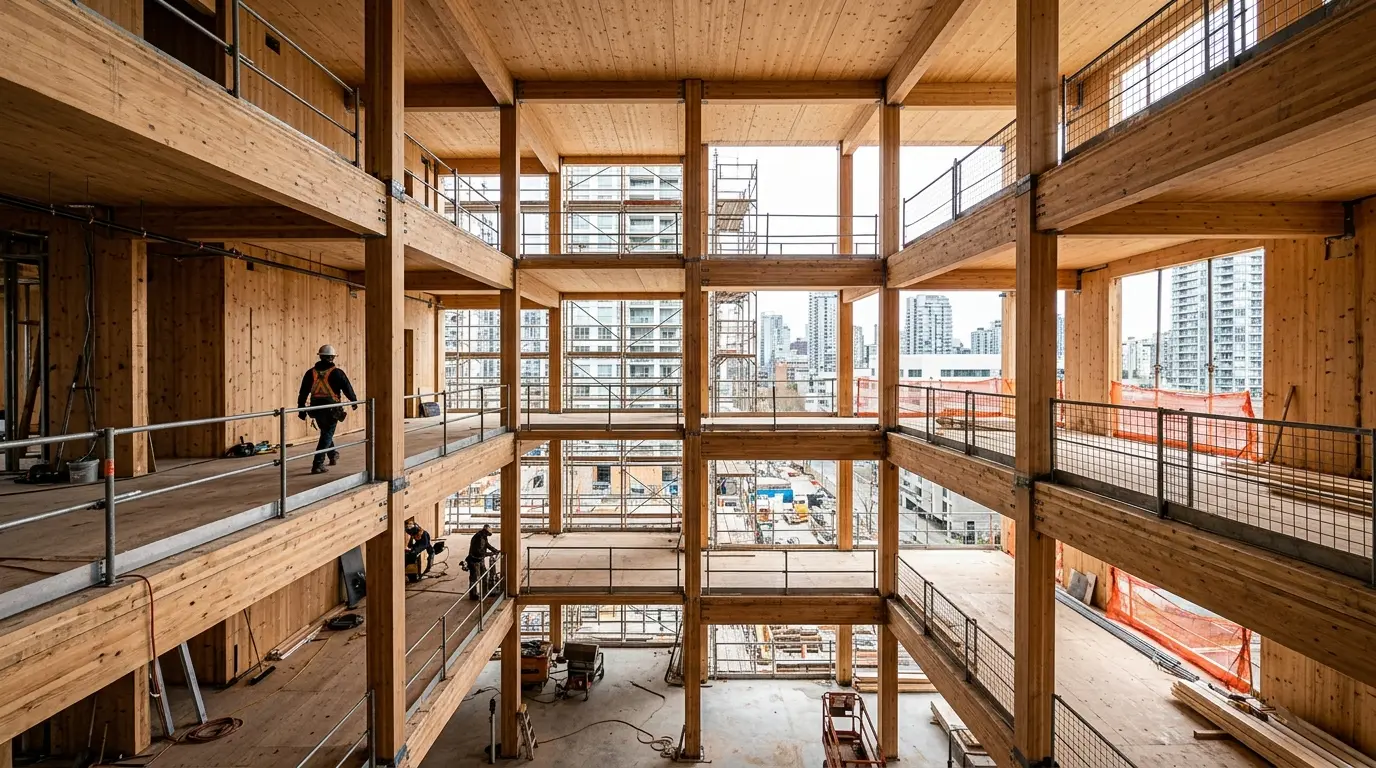
The common thread is that a big share of the building happens inside a factory, out of Vancouver’s rain, rather than being built piece by piece outdoors. That is the core idea, and most of the pros and cons flow from it.
Cost: not the saving most people expect
Let me be direct, because this is where the myths live. Modular is not always cheaper than site-built, and where it is cheaper, the gap on the build cost alone is usually modest.
Site-built wood-frame multiplex construction in Metro Vancouver generally runs a few hundred dollars per square foot, more with premium finishes or a difficult site. Modular does not automatically undercut that. Factory efficiency helps, but you also pay to transport and crane the modules, and you still need a foundation and site services.
The real financial advantage is not the sticker price. It is time, which I will get to next. So when you compare, look at the full project cost, not just the price per square foot of the modules. Our multiplex page breaks down where the money goes on a typical build so you have a baseline to compare against.
Timeline: this is the real advantage
Here is where modular earns its place. Because the factory can build the modules while your foundation and site services are being prepared, two major jobs run at the same time instead of one after the other. On a site-built project, you cannot frame the second floor until the first is done. In a factory, the modules are being built in parallel with your site work.
That overlap can shorten the on-site schedule meaningfully. Some projects report large reductions in build time. I would treat any specific percentage as a rough guide, because the real saving depends on the factory’s queue, delivery logistics, and your site.
Why does the time saving matter so much financially? Because a faster build means fewer months paying construction financing and fewer months carrying the property before you can rent or sell. On a multiplex, those carrying costs add up quickly, and cutting them is often worth more than a small difference in build price. If you want to understand the full picture of how a multiplex project comes together, our homeowner’s guide to building a multiplex walks through the whole process.
Quality: better than its reputation
Some people still picture modular as flimsy or temporary. That is out of date. Factory-built modules are constructed in a controlled environment, protected from weather during the build, and inspected as they go. The materials and finishes can match site-built.
That said, quality depends on the factory. As with any builder, you are choosing a company, not just a method. Look at completed projects, ask for references, and confirm the factory builds to BC code and can deliver to Vancouver.
Financing and appraisal quirks
This is the part that trips people up, so pay attention here.
Financing a modular build can work differently from a site-built one. On a normal build, the lender releases money in stages as work is completed on your land, which they can see and value. With modular, you often pay the factory for modules before they are on your lot, so there is a period where you have paid for something that is not yet standing on your property. Not every lender is comfortable with that, and some are simply less familiar with modular.
Appraisals can be a similar story. An appraiser who does not see much modular work may be cautious. The encouraging news is that CMHC has expanded mortgage insurance support for modular multi-unit projects, which makes financing easier than it used to be.
My advice: line up a lender and an appraiser who understand modular early, before you commit to the method. Get a market appraisal done to support both your financing and your feasibility numbers. Do not assume your usual construction lender will treat a modular build the same way.
Permit and site considerations
Modular still goes through the City of Vancouver permit process like any other build. It has to meet the same zoning, setbacks, and rules, including the rainwater management requirements that apply to multiplexes.
The extra thing to check is access. Craning modules onto a foundation needs room for a truck and a crane. A tight lot, a narrow street, overhead wires, or big trees can make delivery difficult or impossible. This is worth checking early, because a site that cannot take the modules rules the method out no matter how good the numbers look.
And the usual caution applies. Zoning that allows up to eight units on a typical R1-1 lot under Bill 44 does not mean eight modular units will fit and work on your specific site. Our guide to R1-1 zoning in Vancouver covers what the base zoning gives you.
When modular makes sense
Pulling it together, modular tends to make sense when:
- Speed matters, and cutting months of carrying cost is worth more to you than a small build-price difference.
- You are building several similar units that suit repeatable factory design.
- Your lot has decent crane and truck access.
- You have a lender and appraiser who understand modular.
It makes less sense on a very tight or hard-to-reach site, or when your design is highly custom and does not suit a factory. As with any build, the right answer comes from running the full cost and timeline for your specific lot and design against a site-built option, not from the general reputation of the method.
Key Takeaways
- Modular construction builds large sections or whole units in a factory, then cranes them onto your foundation; panelized prefab ships flat panels assembled on site.
- The build cost is not dramatically cheaper than site-built; the real advantage is a faster timeline.
- Speed cuts construction financing and carrying costs, which is often where modular actually pays off.
- Quality can match site-built, but it depends on the factory, so vet the company like any builder.
- Financing and appraisal can be trickier because you pay for modules before they are on your land; line up a modular-friendly lender and appraiser early. CMHC has expanded support for modular multi-unit projects.
- Modular needs good crane and truck access, so a tight or hard-to-reach lot can rule it out; always compare full cost and timeline for your specific lot.
Frequently Asked Questions
What is modular construction for a multiplex?
Modular construction builds large sections of the building, sometimes whole rooms or units, in a factory. The finished modules are trucked to your lot and craned onto a foundation, then joined and connected to services. A related method, panelized prefab, ships flat wall and floor panels that are assembled on site. Both move a big share of the work indoors, away from Vancouver’s weather, instead of building everything piece by piece outdoors.
Is modular cheaper than site-built for a Vancouver multiplex?
Not always, and not by a huge margin on the build cost alone. The bigger saving is usually time, because factory work happens while the site work and foundation go in at the same time. Faster completion means less time paying construction financing and property carrying costs, which is where the real money adds up. Compare full project costs, not just the price per square foot of the modules, before assuming modular is cheaper.
How much faster is a modular multiplex to build?
It can be meaningfully faster because the factory builds the modules while your foundation and services are prepared on site, so two things happen at once. Some projects report large reductions in the on-site schedule. The saving is real but depends on the factory’s queue, delivery logistics, and your site, so treat any specific percentage as a rough guide and confirm the schedule with your builder for your project.
Are there financing or appraisal issues with modular homes?
There can be. Some lenders and appraisers are less familiar with modular and factory-built construction, and financing can be structured differently because you pay the factory for modules before they are on your land. CMHC has expanded mortgage insurance support for modular multi-unit projects, which helps. Line up a lender and an appraiser who understand modular early, and get a market appraisal done to support both financing and feasibility.
When does modular make sense for a multiplex?
Modular tends to make sense when speed matters, when you are building several similar units that suit repeatable factory design, and when your lot has decent crane and truck access. It makes less sense on a very tight or hard-to-access site, or when your design is highly custom. As with any build, the right answer comes from running the full cost and timeline for your specific lot and design against a site-built option.
Sources
- CMHC : modular and prefabricated housing
- Province of BC : small-scale multi-unit housing (Bill 44)
- City of Vancouver : home property and development
- BC Housing : building excellence and innovation
- Greater Vancouver Realtors : monthly market reports
Work with Rain City Properties
Modular can shave real time and cost off a multiplex, but only on the right lot and with the right team, and the financing needs planning. If you are weighing a modular build in Vancouver this year, I can help you find a lot that suits the method, connect you with lenders and builders who know modular, and compare the full numbers against a site-built plan before you commit.
Contact Greyden Douglas directly at (604) 218-2289 or book a call to discuss your Vancouver real estate goals.
Frequently asked questions
What is modular construction for a multiplex?
Modular construction builds large sections of the building, sometimes whole rooms or units, in a factory. The finished modules are trucked to your lot and craned onto a foundation, then joined and connected to services. A related method, panelized prefab, ships flat wall and floor panels that are assembled on site. Both move a big share of the work indoors, away from Vancouver's weather, instead of building everything piece by piece outdoors.
Is modular cheaper than site-built for a Vancouver multiplex?
Not always, and not by a huge margin on the build cost alone. The bigger saving is usually time, because factory work happens while the site work and foundation go in at the same time. Faster completion means less time paying construction financing and property carrying costs, which is where the real money adds up. Compare full project costs, not just the price per square foot of the modules, before assuming modular is cheaper.
How much faster is a modular multiplex to build?
It can be meaningfully faster because the factory builds the modules while your foundation and services are prepared on site, so two things happen at once. Some projects report large reductions in the on-site schedule. The saving is real but depends on the factory's queue, delivery logistics, and your site, so treat any specific percentage as a rough guide and confirm the schedule with your builder for your project.
Are there financing or appraisal issues with modular homes?
There can be. Some lenders and appraisers are less familiar with modular and factory-built construction, and financing can be structured differently because you pay the factory for modules before they are on your land. CMHC has expanded mortgage insurance support for modular multi-unit projects, which helps. Line up a lender and an appraiser who understand modular early, and get a market appraisal done to support both financing and feasibility.
When does modular make sense for a multiplex?
Modular tends to make sense when speed matters, when you are building several similar units that suit repeatable factory design, and when your lot has decent crane and truck access. It makes less sense on a very tight or hard-to-access site, or when your design is highly custom. As with any build, the right answer comes from running the full cost and timeline for your specific lot and design against a site-built option.
Related Vancouver real estate pages
Continue with local service pages, neighbourhood guides, and actionable resources related to this topic.