Quick answer: A buyer due-diligence guide to Vancouver's pre-1940 character homes, covering knob-and-tube wiring, underground oil tanks, foundation and seismic concerns, asbestos and lead, single-pane windows, and the multiplex potential of large older lots.
Vancouver's Craftsman, Edwardian, and bungalow homes have real charm and solid framing. They also hide knob-and-tube wiring, oil tanks, and seismic risk. Here's how I help buyers check an old house before they commit.
Want a free assessment for your property?
Leave your name and phone — Greyden will call you back with a personalized market snapshot. No spam, no drip campaigns.
Join 1,000+ Vancouver homeowners. No spam, unsubscribe anytime.
A buyer told me last spring that she’d walked into a 1922 Edwardian on the east side and known within thirty seconds it was the one. The fir trim, the boxed-beam ceiling, the porch wide enough for two chairs and a dog. I get it. There’s a reason people fall hard for these houses.
Then we went down to the basement. Cloth-wrapped wiring stapled across the joists, a patched-over spot where an oil line used to run, and a foundation wall you could push a coin into. She looked at me like the romance had just curdled.
It hadn’t. It had just gotten honest. Pre-1940 homes in Vancouver — the Craftsmans, the Edwardians, the early bungalows scattered across the east side, Kitsilano, and the older pockets of the west side — are some of the best-built houses in the city. They also carry a specific set of problems that a 2015 townhouse simply doesn’t. The buyers who do well are the ones who know the list going in.
This is that list.
What you’re actually getting with an old house
Start with the good, because it’s real and it’s why these homes hold their appeal.
Most pre-war Vancouver houses were framed with old-growth Douglas fir. That lumber is denser, straighter, and stronger than the fast-grown framing that comes off a truck today. The houses were often over-built relative to modern code minimums — bigger joists, tighter spacing, full-dimension lumber. When an inspector taps the framing in a sound 1920s house, it often rings solid in a way newer construction doesn’t.
The lots are the other prize. A lot of these homes sit on the classic Vancouver 33-foot-wide lot, and many run deep — 120 feet or more. That matters now more than it used to, because a deep lot with old-growth bones is exactly the kind of property that works for a laneway home or, increasingly, a multiplex. More on that below.
The charm isn’t fluff either. Box-beam ceilings, leaded glass, fir floors under three layers of carpet — these features command a premium and can’t be faithfully reproduced on a renovation budget. If you want them, an old house is the only place to get them.
The systems that cost real money
Here’s where the honesty comes in. An old house is a collection of systems that have all aged at once.
Knob-and-tube wiring
This is the one I see derail deals. Knob-and-tube was standard wiring through the 1940s — individual cloth-insulated conductors run through ceramic knobs and tubes. It can still be safe if it’s intact and hasn’t been buried in insulation or overloaded, but the bigger problem is insurance. Many insurers won’t write a policy on an active knob-and-tube house, and the ones that will often demand it be replaced within a set window. Lenders sometimes follow.
A full rewire on a house is not cheap. Depending on size, access, and how much plaster has to come down, you’re realistically looking at somewhere in the range of $15,000 to $40,000 or more — treat that as an illustrative range, not a quote. Get an electrician to scope it during your conditions, and price the rewire into your offer. I’ve written this up in more detail in our guide to knob-and-tube wiring in Vancouver homes.
Underground oil tanks
Before natural gas took over, a lot of these homes were heated with oil, and the tanks were buried in the yard. When owners switched fuels, plenty of those tanks were simply abandoned in the ground rather than dug out. A buried tank that’s corroded and leaking can mean soil contamination, and remediation can run from a few thousand dollars to far more if the leak reached a neighbour’s property.
Always order a tank scan before you remove conditions. A company sweeps the yard with detection equipment and tells you whether there’s metal in the ground. If there is, you negotiate removal and any cleanup before you own the problem. Our full walk-through is here: underground oil tanks in Vancouver’s older homes.
Foundation and seismic
Many pre-1940 homes sit on the original foundation — sometimes brick, rubble, or unreinforced concrete that predates any thinking about earthquakes. Vancouver is in an active seismic zone, and these houses generally have no bolting to the foundation, no shear walls, no modern detailing.
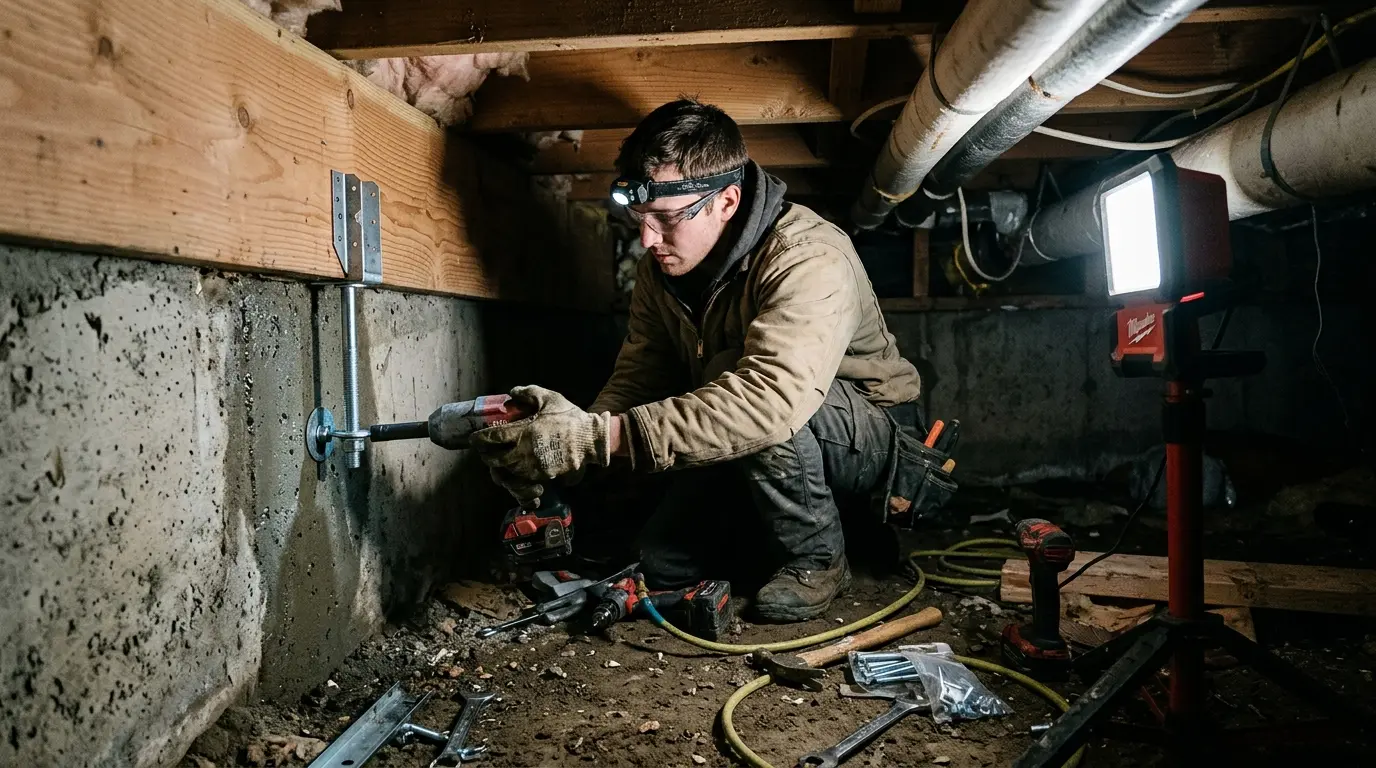
You don’t have to fix all of that to buy. But you do want a structural read on the foundation’s condition, drainage around the house, and whether it’s settled. A seismic retrofit — bolting the house to its foundation, adding plywood shear panels in the crawlspace — is one of the better dollar-for-dollar safety upgrades on an old house, and it’s worth pricing.
Asbestos and lead
Asbestos turns up in old vermiculite insulation, floor tiles, duct wrap, and plaster, and it was used in materials well into the 1980s, so even later renovations can have introduced it. Lead shows up in old paint and plumbing. Intact, neither is an emergency. The risk comes when you disturb them during a renovation or demolition. Before any major work, BC requires a hazardous-materials survey on many projects — so test first, plan second, and budget for safe removal if you’re opening up walls.
Single-pane windows and comfort
Original wood windows are often single-pane and drafty. They’re also frequently the character feature buyers most want to keep. You can weatherstrip and add storm windows to keep the look, or replace with sympathetic units. Either way, expect higher heating bills than a new build until you address the envelope. FortisBC and BC Hydro both run rebate programs for efficiency upgrades worth checking.
The multiplex question
This is the part of old-house buying that has changed the most. Under BC’s Bill 44 and Vancouver’s R1-1 zoning, a standard lot can now support up to eight units — a multiplex. Old character homes very often sit on exactly the deep, standard lots that make redevelopment work.
So a pre-1940 house can be two very different purchases: a home to restore, or a redevelopment site. Sometimes both at once. If you’re weighing the second path, read our R1-1 zoning explainer and the multiplex overview.
The wrinkle is character retention. If a house has recognized heritage or character value, the city has incentives — including added density — for keeping and restoring it rather than demolishing. That can make retention more financially attractive than it first looks, but it also constrains what you can tear down. Confirm the zoning and check whether the home carries any character designation before you build your numbers around demolition.
How I run due diligence on an old house
When a client is serious about a pre-1940 home, I want these things lined up inside the condition period, not after:
- A home inspection from someone who actually knows old houses, not just new ones.
- An electrical scope to confirm or rule out knob-and-tube and check the panel.
- A tank scan for buried oil tanks.
- A structural and foundation read, with a seismic opinion if the inspection raises flags.
- A hazardous-materials check before any planned renovation.
- A zoning and character-status confirmation if redevelopment is on the table.
This is more work than a condo or a new townhouse, and the condition period needs to reflect that. In a competitive situation, I’d rather have a buyer line up their inspectors in advance and ask for a realistic window than waive conditions on a house this old. The home inspection red flags guide is a good primer on what a thorough inspection should surface.
Key Takeaways
- Pre-1940 Vancouver homes offer old-growth fir framing, deep lots, and character that’s impossible to replicate — genuine advantages, not just nostalgia.
- Knob-and-tube wiring is the most common deal complication because of insurance and lender requirements; budget realistically for a rewire.
- Always order a tank scan for buried oil tanks and a foundation and seismic read before removing conditions.
- Asbestos and lead are manageable when intact; the risk and the cost come during renovation, so test before you open walls.
- Deep standard lots make many character homes candidates for a multiplex under R1-1, but character retention rules can change the math.
- Never waive conditions on a house this old to win a bidding war without first lining up the right inspections.
Frequently Asked Questions
Can you get insurance and a mortgage on a Vancouver home with knob-and-tube wiring?
It is harder. Many insurers either refuse to cover knob-and-tube wiring or require it to be replaced within a set period, and some lenders treat active knob-and-tube as a condition. You can often get coverage with a remediation plan and an electrical inspection, but budget for a full or partial rewire, which commonly runs into the tens of thousands of dollars on a full house.
How do I find out if a pre-1940 home has an underground oil tank?
Hire a tank-scan company to sweep the yard with a metal detector and ground-scanning equipment before you remove your conditions. Many Vancouver homes built before the 1950s were heated with oil and the buried tanks were often abandoned in place rather than removed. A leaking tank can mean expensive soil remediation, so confirm the tank’s status in writing.
Are pre-1940 character homes a good candidate for a multiplex under Bill 44?
Often yes, because older homes frequently sit on the deep 33-foot lots that work well for redevelopment. Under BC’s Bill 44 and Vancouver’s R1-1 zoning, standard lots can support up to eight units. The catch is character retention rules: if the existing house has heritage value, the city may offer density bonuses to keep it, which changes the math. Confirm the zoning and any character designation before you assume you can build.
Should I be worried about asbestos in a pre-1940 Vancouver house?
You should test, not panic. Asbestos was used in many building materials through the 1980s, including some that were added to older homes during later renovations. Intact asbestos is generally low risk; the danger comes from disturbing it during demolition or renovation. Before any major work, get a hazardous-materials survey, which is also a legal requirement for many renovation and demolition projects in BC.
Is the solid old framing in a pre-1940 home actually an advantage?
It can be. Many pre-war Vancouver homes were framed with old-growth fir that is denser and straighter than modern lumber, and the structures are often over-built compared to today’s minimums. That said, age brings settling, outdated foundations, and no seismic detailing, so the quality of the wood does not replace a proper structural and foundation inspection.
Sources
- City of Vancouver — Heritage and character home programs
- Technical Safety BC — Electrical safety and permits
- BetterHomesBC — Home energy retrofit rebates
- FortisBC — Rebates and efficiency programs
- WorkSafeBC — Asbestos in homes and renovation
Work with Rain City Properties
Old houses reward the buyers who do their homework. If you’ve found a Craftsman or an Edwardian you love, I’ll help you figure out what it really is — a home to restore, a redevelopment site, or a money pit dressed up in fir trim — before you commit a dollar.
Contact Greyden Douglas directly at (604) 218-2289 or book a call to discuss your Vancouver real estate goals.
Frequently asked questions
Can you get insurance and a mortgage on a Vancouver home with knob-and-tube wiring?
It is harder. Many insurers either refuse to cover knob-and-tube wiring or require it to be replaced within a set period, and some lenders treat active knob-and-tube as a condition. You can often get coverage with a remediation plan and an electrical inspection, but budget for a full or partial rewire, which commonly runs into the tens of thousands of dollars on a full house.
How do I find out if a pre-1940 home has an underground oil tank?
Hire a tank-scan company to sweep the yard with a metal detector and ground-scanning equipment before you remove your conditions. Many Vancouver homes built before the 1950s were heated with oil and the buried tanks were often abandoned in place rather than removed. A leaking tank can mean expensive soil remediation, so confirm the tank's status in writing.
Are pre-1940 character homes a good candidate for a multiplex under Bill 44?
Often yes, because older homes frequently sit on the deep 33-foot lots that work well for redevelopment. Under BC's Bill 44 and Vancouver's R1-1 zoning, standard lots can support up to eight units. The catch is character retention rules: if the existing house has heritage value, the city may offer density bonuses to keep it, which changes the math. Confirm the zoning and any character designation before you assume you can build.
Should I be worried about asbestos in a pre-1940 Vancouver house?
You should test, not panic. Asbestos was used in many building materials through the 1980s, including some that were added to older homes during later renovations. Intact asbestos is generally low risk; the danger comes from disturbing it during demolition or renovation. Before any major work, get a hazardous-materials survey, which is also a legal requirement for many renovation and demolition projects in BC.
Is the solid old framing in a pre-1940 home actually an advantage?
It can be. Many pre-war Vancouver homes were framed with old-growth fir that is denser and straighter than modern lumber, and the structures are often over-built compared to today's minimums. That said, age brings settling, outdated foundations, and no seismic detailing, so the quality of the wood does not replace a proper structural and foundation inspection.
Related Vancouver real estate pages
Continue with local service pages, neighbourhood guides, and actionable resources related to this topic.